

It usually doesn’t begin with a family meeting. It begins with a phone call.
“Dad fell again, but he says he’s fine.”
Or you stop by your mother’s Brooklyn apartment and notice the groceries are still in the bag. In Queens, the tub has become unsafe. In Manhattan, the person who once managed everything now needs help getting through the day.
Then comes the second worry: how are we going to pay for care?
When “We’re Managing” Stops Feeling True
Families improvise. A daughter comes by after work. A son handles appointments. A neighbor checks in. Someone orders groceries.
For a while, this looks like care.
Then work gets busy. Your parent needs more help. There is another fall, another missed meal, another call during a meeting.
That is when families begin looking at professional home care.
Galaxy Home Care has supported New York families for more than 25 years. Reliable, compassionate caregivers can help with personal care, companionship, meals, mobility, light housekeeping, and daily routines.
Your parent gets consistent care, and you get to be a son or daughter again instead of a full-time coordinator.
One family told us: “I finally stopped checking my phone every ten minutes. Mom was safe, and I could breathe again.”
Private Pay, Insurance, or Medicaid: You May Have Options
Many families assume care must be paid entirely out of pocket. In New York, the picture can be more flexible.
Private pay is often the simplest way to start care quickly and build a schedule around the parent’s actual needs.
If your parent has long-term care insurance, the policy may cover part of eligible home care expenses. Families should review benefit triggers, waiting periods, limits, and documentation.
For some families, spend-down Medicaid may create a path to care when qualifying medical expenses reduce countable income. Eligibility depends on the individual situation.
Galaxy Home Care works with private pay, long-term care insurance, and spend-down Medicaid. That flexibility matters because care needs rarely arrive according to plan. They arrive Tuesday morning when Mom cannot safely get dressed, or Sunday night when Dad says he ate dinner and you discover he did not.
What Good Care Changes at Home
Good care should not make a New York apartment feel like an institution. It should help the home remain a home.
The coffee mug stays in the same cabinet. The favorite chair stays by the window. Familiar routines remain, while a caregiver supports the parts of daily life that have become harder.
For some families, a few hours of care are enough. Others may need live-in home care.
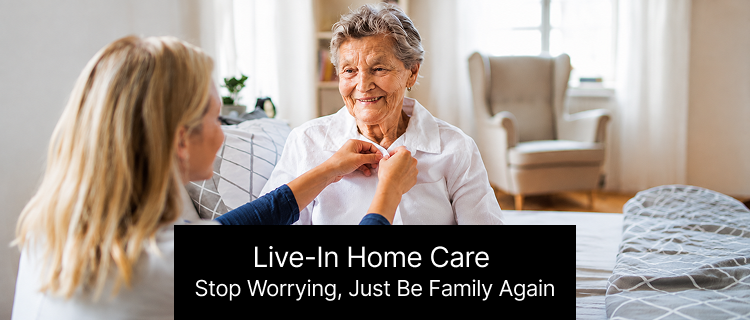
Live-in care can suit seniors who want to remain at home, people with cognitive decline, those recovering after hospitalization, clients with chronic conditions, and families who cannot provide full-time support. A live-in caregiver may help with bathing, dressing, meals, laundry, companionship, reminders, mobility, and daily routines. Unlike 24-hour shift care, live-in arrangements include an agreed overnight rest period.
Live-In Home Care: Practical Tips
- Decide whether your parent needs daytime support or someone awake overnight.
- Ask how caregivers are screened, trained, matched, and replaced if unavailable.
- List the actual care needs: personal care, meals, mobility, housekeeping, companionship, and reminders.
- Review private pay, long-term care insurance, and Medicaid options.
- Expect an adjustment period while your parent and caregiver build trust and routine.
If you are starting to wonder whether your mother or father needs more care at home, you do not need every answer before making the first call. Call Galaxy Home Care. We can talk through what is happening now, what level of care may help, and which payment option makes sense for your family in Brooklyn, Queens, or Manhattan.